
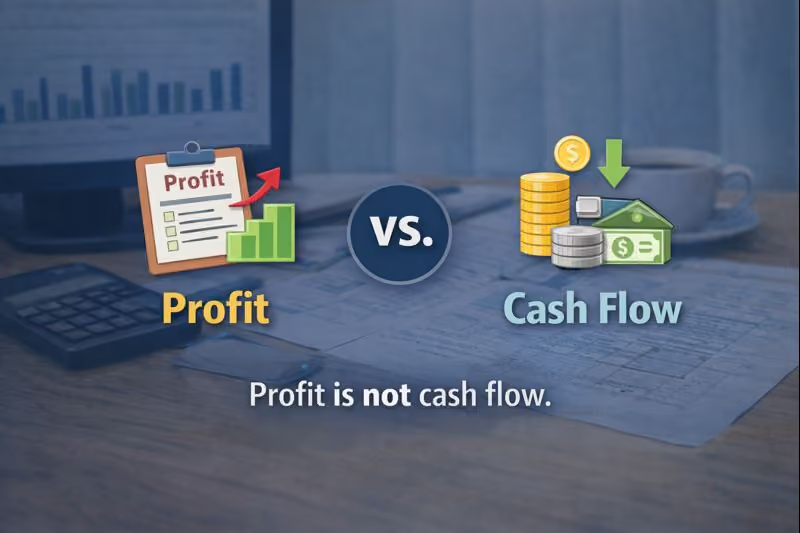
Here’s the trap most business owners fall into: they look at a profit-and-loss statement and assume profit means cash in the bank.
It doesn’t.
Profit is a paper number. Cash flow is what actually keeps your business alive. You can show profit while still struggling to pay bills if your money is tied up in receivables, equipment, or slow-moving expenses.
The secret is learning to bridge the gap between what your accountant reports and what truly builds wealth.
One of the simplest yet most powerful strategies is to set up profit allocation accounts. Instead of keeping all business money in a single checking account, divide it by purpose.
For example:
When you automate these transfers every week or month, your cash flow stops being a mystery. You’ll always know what’s available for operations and what belongs to you.
This turns your business from a reactive rollercoaster into a proactive financial system.
Here’s where proactive tax planning changes everything. Most business owners overpay taxes because their CPA only focuses on filing, not strategy.
When your tax plan is optimized — through entity structure, expense timing, and retirement contributions — you can free up tens of thousands of dollars that would have gone to the IRS. That reclaimed capital becomes fuel for investment, expansion, or debt reduction.
Think of tax planning as your first reinvestment strategy. Every dollar you save can go right back into building your financial independence.
Once your cash flow is structured and your taxes are minimized, the next step is to reinvest intelligently. The key word here is scalable.
Examples include:
Each reinvestment should multiply your ability to generate more cash flow, not just increase workload.
We often recommend a simple framework to balance growth, stability, and freedom:
These percentages will vary, but the structure keeps your business lean, strategic, and sustainable.
When money flows with purpose, you build financial momentum.
Financial independence doesn’t happen by accident. It’s built through consistent habits:
Cash flow mastery is the bridge between working in your business and building wealth from your business.
👉 Want help turning profit into freedom? Book a Free 15-Minute Consultation and I’ll show you how to create your personalized cash flow blueprint.
Book Here